Style system guide
DETAIL / TEXTURE / YOUStyle Essences: A Complete Introduction to John Kitchener's 7 Essences
Kitchener essences are seven style qualities in John Kitchener’s approach: Dramatic, Romantic, Classic, Natural, Gamine, Ingenue, and Angelic (also called Ethereal). Rather than assigning everyone one fixed look, his system considers a personal blend of qualities across the face and body. A percentage mix, such as 50% Natural, 30% Classic, and 20% Romantic, is an example of how a blend may be expressed, not a formula you can calculate from measurements. Your body shape can inform garment fit while an essence vocabulary helps you explore a garment’s visual character.
| Question | What to look at |
|---|---|
| Body shape | Relative outline and how a garment fits at the shoulders, waist, and hips. |
| Style essence | The character of lines, textures, prints, and details in the whole look. |
| Personal blend | How several qualities might work together rather than one label dictating every item. |
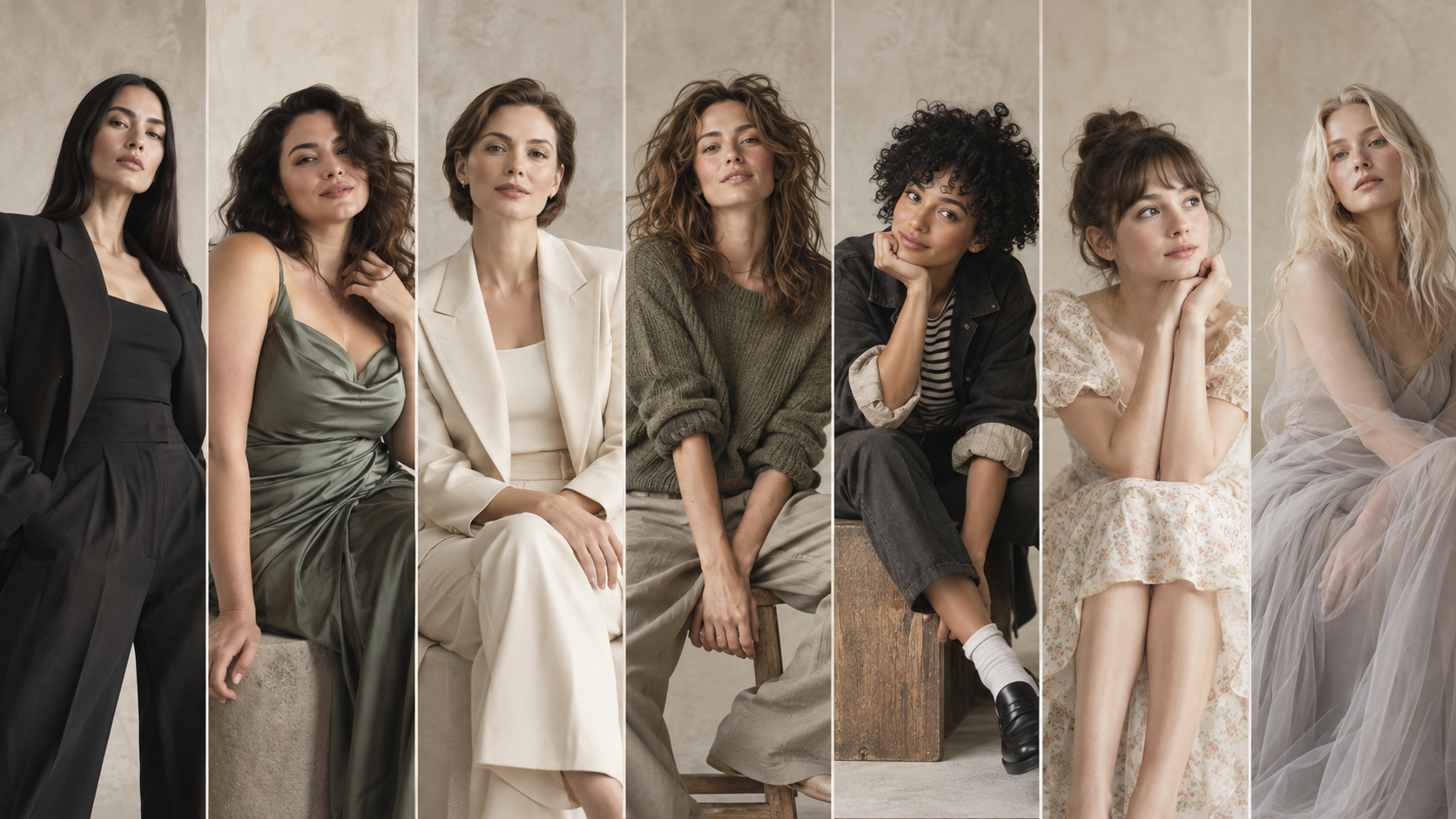
Understanding the Proportions and Anatomy of the Silhouette
Shoulders, bust, waist, and hips help describe the outline a garment has to accommodate. They matter when choosing a size, checking a seam, or deciding where a jacket closes. Kitchener’s description of his complete essence analysis considers visual elements of both face and body when developing a style blend; it does not turn a waist-to-hip ratio into an essence. If fit is your immediate question, measure your shoulders, waist, and hips using a consistent method.
Clothing size and weight do not by themselves describe visual style. A neatly fitted blazer and a loose linen layer can fit the same person while giving very different impressions. Bone structure, facial features, expression, movement, and the lines of clothing all influence what a stylist might notice, but a casual photo comparison cannot reproduce Kitchener’s consultation or establish precise percentages. His basic analysis service describes percentages based on face and outfit photos; detailed guidance on necklines, prints, and textures belongs to his more complete service.
Identifying the Silhouette: Key Visual Signs and Formulas
There is no verified circumference formula for assigning a Kitchener essence. Treat the seven names as a vocabulary for observing design qualities, then compare garments in consistent light and a similar pose. The descriptions below are broad editorial starting points, not a self-scoring test or an official set of typing rules.
On a small screen, swipe the comparison table sideways.
| Essence | Design quality to explore | A small outfit experiment |
|---|---|---|
| Dramatic | Strong, clean, elongated lines | Compare a sharply tailored jacket with a softer one. |
| Romantic | Rounded, flowing detail | Try a softly draped neckline or curved seam. |
| Classic | Even scale and orderly detail | Compare a balanced, simple outfit with a high-contrast one. |
| Natural | Relaxed line and tactile texture | Add an easy linen or textured layer. |
| Gamine | Compact contrast and lively detail | Try a shorter layer or a small, crisp contrast. |
| Ingenue | Light, delicate detail | Compare a fine trim with a larger, bolder detail. |
| Angelic / Ethereal | Airy, elongated softness | Try a long, sheer layer over an otherwise simple outfit. |
Kitchener uses the name Angelic, or Ethereal, for the seventh quality. His account also emphasizes that a person can have more than three essences. The table is therefore a way to compare design effects, not a seven-box checklist. Notice whether a high or low waist, a long or short torso, asymmetry, or a changed camera angle affects what you see. For those proportion questions, the body-proportions guide is more useful than guessing a percentage.
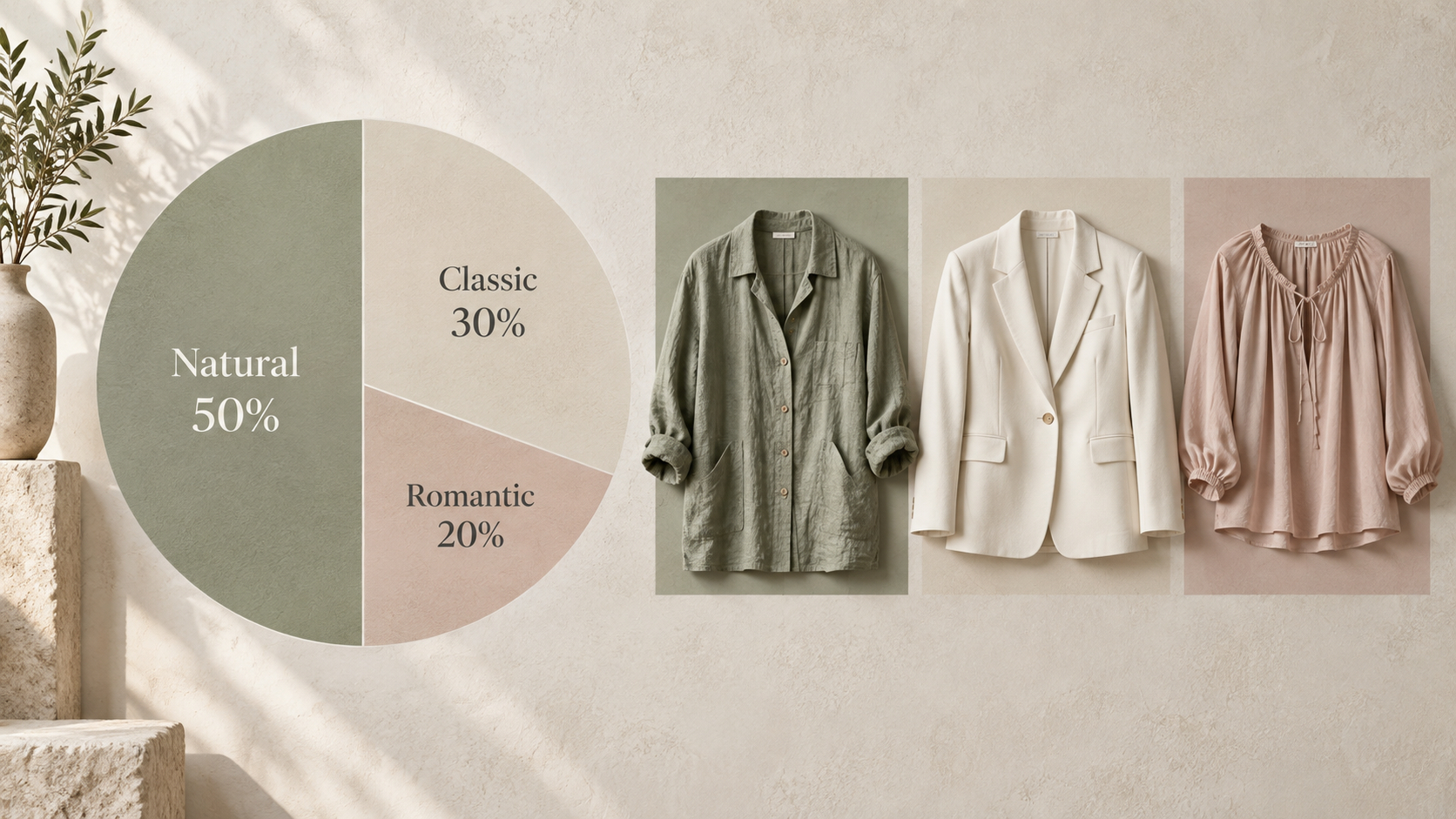
The percentages in the illustration add to 100, but they do not prescribe the number of garments to buy or the amount of each fabric to wear. Think of a blend as a flexible design brief: perhaps a relaxed jacket supplies the strongest note, a tidy cut keeps the outfit composed, and a soft blouse adds a smaller accent. Kitchener’s service description connects essence blends with choices such as necklines, prints, and textures.
Styling Principles: Balance, Drapery, and Fabric Choice
Begin with clothing that fits and lets you move. Then vary one design feature at a time. Fabric texture, print scale, and garment character can change the overall impression even when the underlying silhouette stays similar. These are practical styling experiments inspired by the system, not rules that assign your essence.
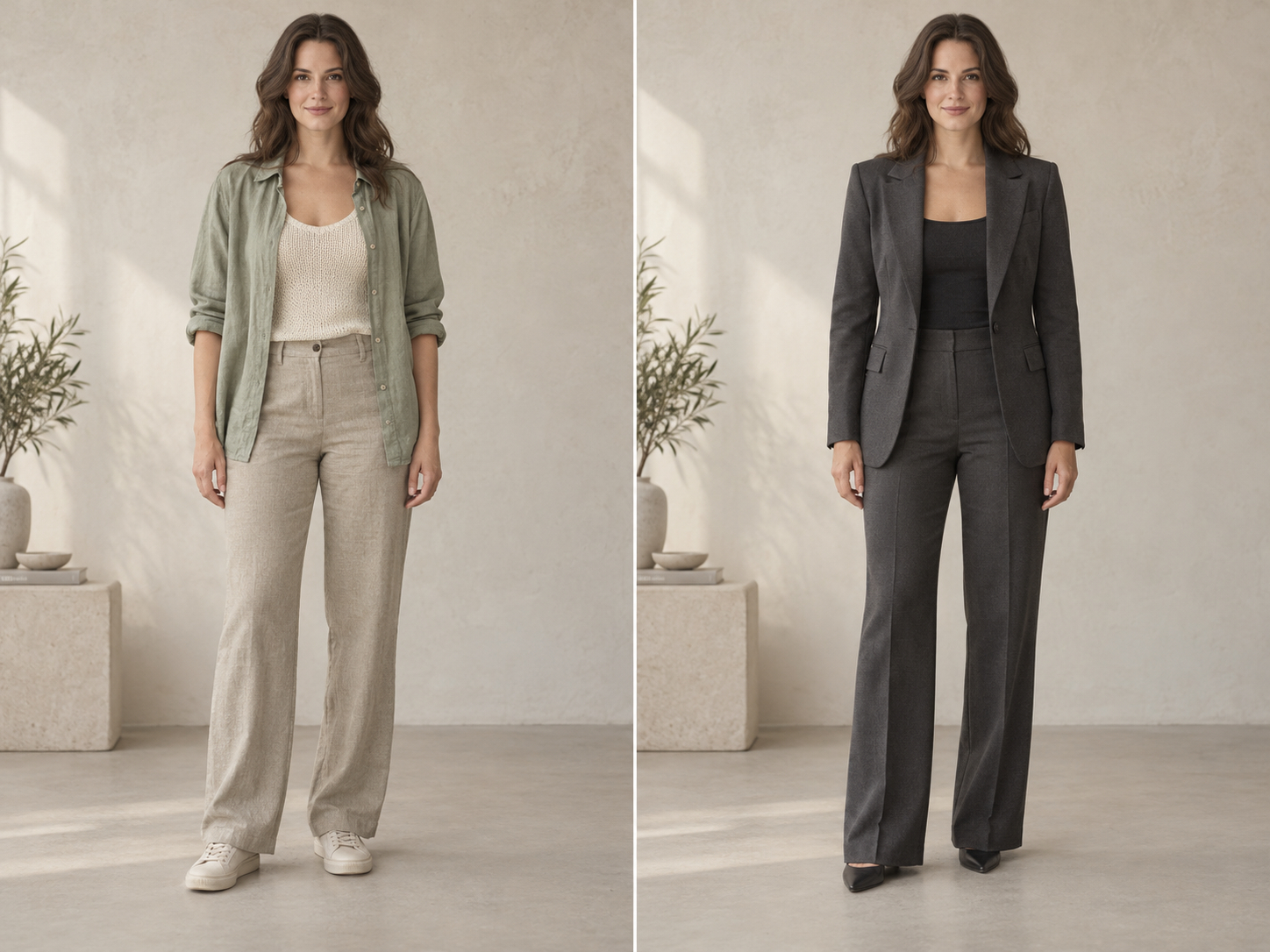
Strategic Necklines and Shoulder Cuts
A V-neck draws the eye down; a boatneck extends a horizontal line; a raglan sleeve makes the shoulder transition softer. Compare two versions with the same bottom half so you can see what the neckline or seam changes. A Dramatic-inspired look might use a crisp, long lapel, while a Romantic-inspired detail could be curved and fluid. Neither choice is mandatory, and a shoulder seam that pulls needs a fit adjustment before any style interpretation.
Waistlines and Midsection Drape
High-rise, mid-rise, empire, and wrap constructions place emphasis in different spots. Try a clean, structured waist against a fluid wrap or an easy untucked layer. Ask whether the fabric falls as intended when you sit and move. A preference for one drape does not prove an essence or replace the practical work of finding a comfortable rise.
Hemlines and Trouser Silhouettes
An A-line hem, straight trouser, wide leg, or cropped pant changes the rhythm of an outfit. A longer continuous line can feel more Dramatic-inspired; shorter visual breaks can introduce a Gamine-inspired accent. Keep shoe height, pose, and camera angle similar when comparing photographs. The geometric body-shapes guide explains relative outline, while the Kibbe guide introduces a separate Image Identity system. Neither system supplies a shortcut to Kitchener’s essence percentages.
Common Misconceptions and Dressing Nuances
You do not have to choose one strict essence or ban a color or garment forever. Kitchener describes people as multifaceted and says a blend may include four or more qualities. You can also choose a look for occasion, comfort, or personal taste. The useful question is what changes when you adjust the scale of a print, the texture of a fabric, or the sharpness of a seam.
Body-shape labels compare an outline; Kitchener’s essences describe a broader visual blend; Kibbe’s Image Identities have their own terminology and method. A person described as hourglass, pear, or rectangle is not automatically Romantic, Natural, or any other essence. A photograph may help you compare outfits, but lighting, pose, and perspective can alter the impression. For an exploration of fit first, use the body-shapes overview, then return to the style details you want to test.
Frequently Asked Questions
How do I know if I have this body shape or a neighboring one?
Start with the outline and fit criteria in the body-shapes guide. An essence is a separate styling idea, so a neighboring shape label will not settle your essence blend. Compare a few complete outfits under similar conditions and describe the design details you prefer.
Can weight gain or loss change my primary silhouette?
Weight changes can alter current measurements and how clothes fit. Recheck your garments and proportions if that helps with sizing. A change in weight does not provide a Kitchener essence calculation, and no single measurement can identify a blend.
What is the single most flattering clothing formula for everyday wear?
There is no universal formula. Choose a comfortable base outfit, then try one change in texture, print scale, or tailoring. Keep what serves your preferred look and daily life rather than treating any essence label as a dress code.
How does vertical proportion (torso vs legs) affect this shape?
Waist placement and hemlines can make an outfit appear more continuous or more segmented. They matter to silhouette and fit, but torso-to-leg ratio does not assign an essence. The body-proportions guide shows how to compare those garment effects.
Explore Your Personal Proportions
Try the side-by-side outfit exercise, or read the measurement guide if fit is the main question. If you would rather start with a photo and short questionnaire, the body type test is a planned flow; photo upload and personal results are not available yet. It is not an official Kitchener assessment.