Body proportions guide
PROPORTION / FIT / YOUBody Proportions Guide: Understanding Vertical Balance and Torso Length
Body proportions describe vertical balance: how your torso length compares with your leg length, and where your natural waist sits between your rib cage and pelvis. Two people can have the same horizontal body-shape description yet prefer different trouser rises or jacket lengths because a seam lands at a different point on each body. Start by noticing your waist placement and the length of your legs relative to your torso. Then compare garments on your own body; no single ratio prescribes what you should wear.
| Notice | What to compare | Clothing question to try |
|---|---|---|
| Longer torso relative to legs | More distance from shoulders to the natural waist or crotch than you expected | Does a higher waistband move the visual break where you want it? |
| Shorter torso relative to legs | Less space between the rib cage and natural waist, with more apparent leg length | Would a mid-rise leave more visible space above the waistband? |
| Balanced to your eye | Neither section dominates the full-length outline | Which seam and hem placements feel most comfortable? |
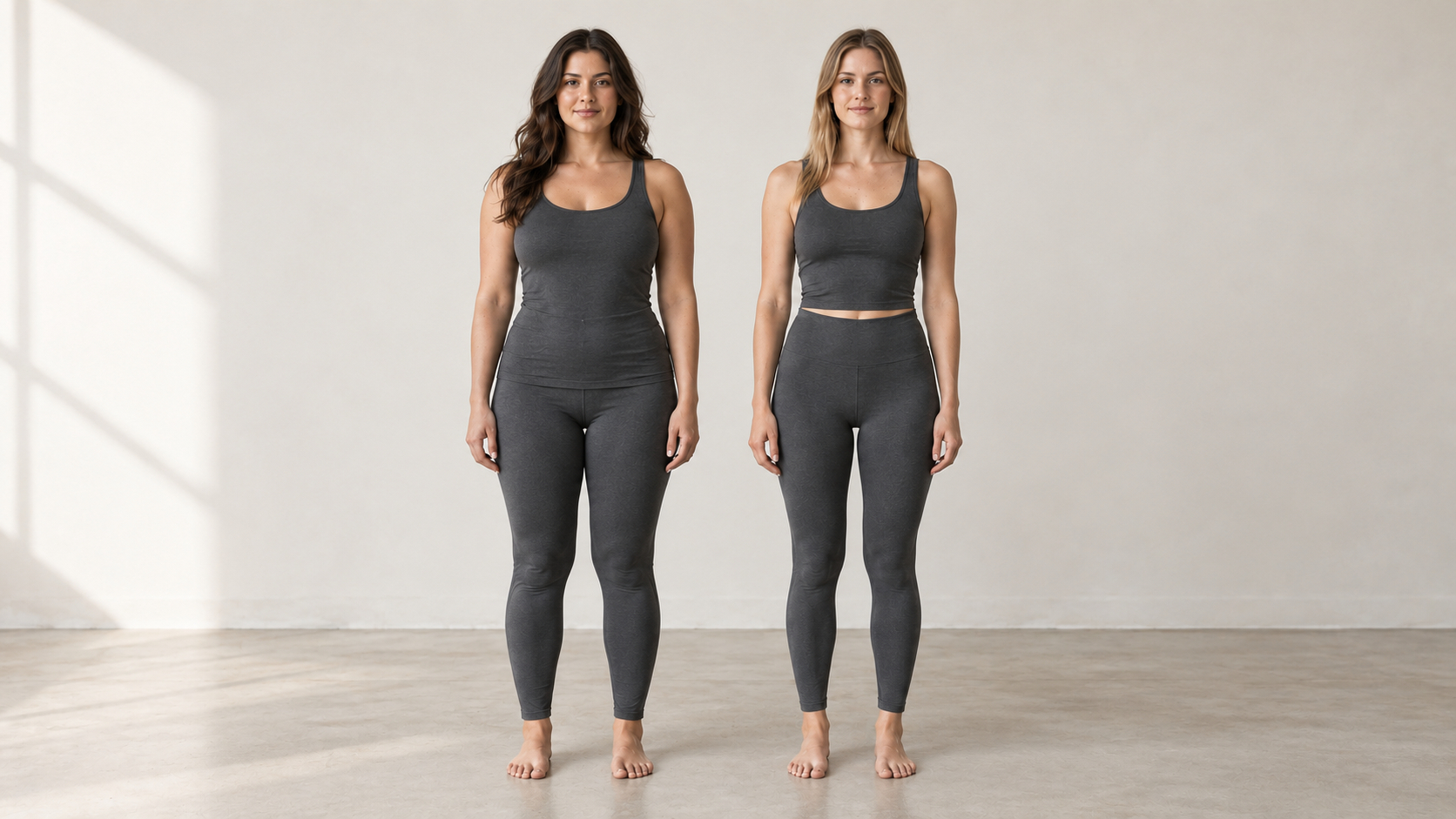
Understanding the Proportions and Anatomy of the Silhouette
Shoulders, bust, natural waist, and hips mark the horizontal outline, while shoulder-to-waist and waist-to-floor distances help you see its vertical arrangement. Your natural waist is the narrow or folding area between the rib cage and pelvis; it is not necessarily level with your navel or with the waistband of your favorite pants. The inseam is the inside-leg distance used to size trousers. For a body measurement, the Levi’s US size guide describes measuring from crotch to ankle. For a consistent horizontal comparison, first measure your shoulders, waist, and hips.
Your weight and clothing size do not tell you where those vertical landmarks fall. Two people who buy the same size can have different torso lengths, leg lengths, and preferred rises. Likewise, a long jacket or a waistband can change the visual line of an outfit without changing your anatomy. Here, “vertical line” means the continuous length your eye follows through clothing; it is an ordinary styling description, not a diagnosis or a label from a named style system.
Identifying the Silhouette: Key Visual Signs and Formulas
Stand in front of a full-length mirror in clothes that show the waist without compressing it. Note where your natural waist indents, where the crotch seam falls, and how much length remains from there to the floor. Repeat in a side view. A straight-on photo taken at about waist height can help you compare outfits, but camera height, lens distortion, pose, and footwear can change apparent proportions. A slight left-to-right difference is normal; use the side that matters for garment fit rather than forcing symmetry.
If you like numbers, record standing height and the inside-leg distance with the same units. Calculate inside-leg share = inside-leg distance ÷ standing height × 100. For example, 30 inches divided by 65 inches is about 46%. That percentage is a repeatable description of your measurements, not a validated cutoff for “long legs” or a body-shape category. Garment inseam also depends on desired hem length, so do not substitute a jeans label for a body measurement. The Levi’s denim dictionary distinguishes rise—the distance from the crotch seam to a garment’s waist—from inseam.
On a small screen, swipe the table sideways to compare columns.
| Observation | What it may look like | Check before choosing a garment | Adjacent possibility |
|---|---|---|---|
| Relatively longer torso | Natural waist or crotch appears lower in the full-length outline | Compare a higher and a medium trouser rise | A low waistband may create the same impression on a more balanced frame |
| Relatively shorter torso | Natural waist sits closer to the rib cage | Check whether a high waistband crowds the space below the bust | A short top can make the torso look shorter without changing its length |
| Higher natural waist | Waist indent sits farther above the hip curve | Check where a skirt or pant waistband actually rests | An empire seam sits higher than the natural waist by design |
| Lower natural waist | More visible distance between rib cage and waist indent | Compare the same garment with a different rise | A dropped-waist dress can visually lower the break |
These are observations, not fixed types. Horizontal descriptions such as hourglass or rectangle compare shoulder, bust, waist, and hip widths; they do not determine torso length. Read the body-shape overview if you want that separate comparison.
Styling Principles: Balance, Drapery, and Fabric Choice
Think of a neckline, waistband, and hem as three places where an outfit changes direction. Adjust one at a time, using garments that fit comfortably. The goal is to choose the balance you enjoy, whether that means a continuous line or a deliberate break.
Strategic Necklines and Shoulder Cuts
A V-neck draws the eye toward the center and downward; a boatneck emphasizes width across the upper body. Raglan sleeves make the shoulder seam less distinct. These choices change the starting point of the outfit’s visual line, but they do not lengthen a torso or alter a body-shape label. Try the same trousers with two tops so the neckline or shoulder cut is the only obvious change. If one top pulls at the shoulder or bust, solve the fit issue before judging its proportion effect.
Waistlines and Midsection Drape
High-rise trousers bring the clothing break upward; mid-rise trousers place it lower. Neither label guarantees where the waistband will land on your body, because rise is a garment measurement and waist placement varies. Try both while standing and sitting. If you have less space between bust and natural waist, a high rise may feel crowded; a mid-rise may leave more room. If you want the legs to read as longer, a higher visible waist can be an option. A fluid wrap follows the waist with softer drape, while an empire seam creates a break above it.
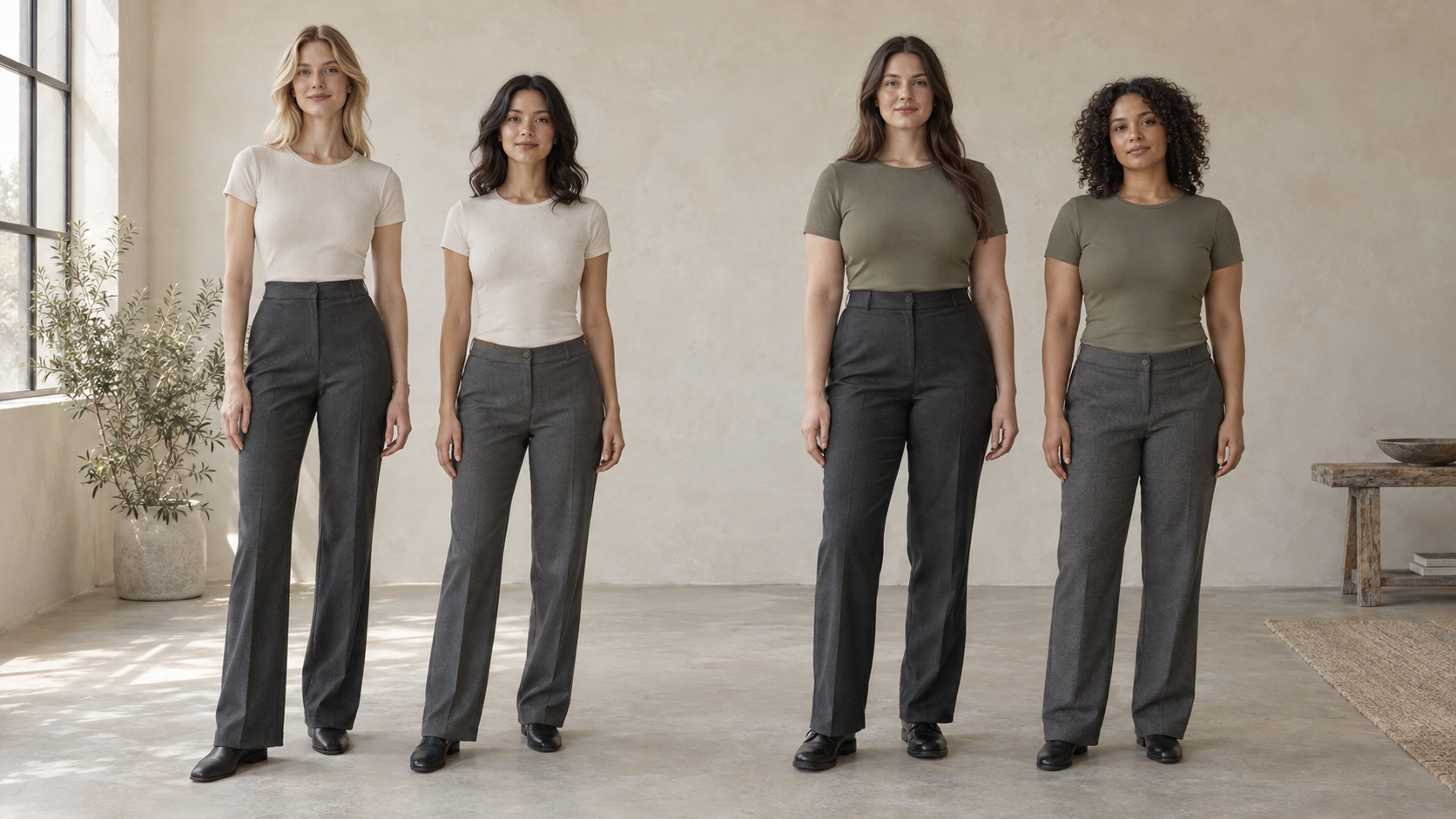
Fabric matters as much as the stated rise. A rigid waistband holds a sharper horizontal line; softer cloth may fall more gently. Keep the top, shoes, and trouser leg similar when comparing rise, or several changes will compete for your attention.
Hemlines and Trouser Silhouettes
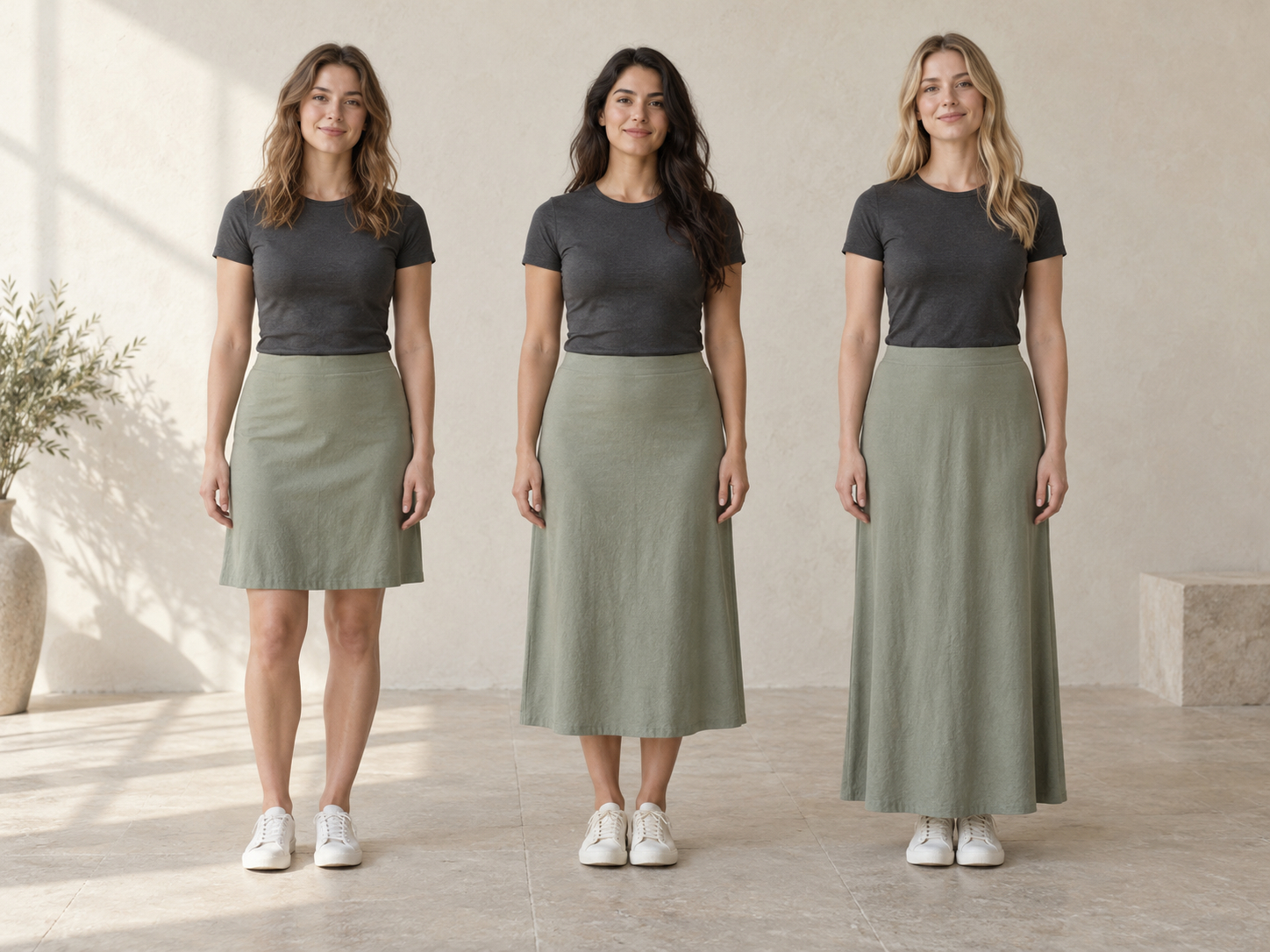
A knee-length skirt, midi skirt, and maxi skirt place the next visual break at different heights. A-line fabric adds movement below the waist; a straight skirt keeps a narrower outline. Straight or wide-leg trousers can create a longer uninterrupted path to the shoe, while cropped trousers add a break above the ankle. Try the same top and footwear with two hems and look at the whole outfit from a consistent distance.
Common Misconceptions and Dressing Nuances
There is no permanent torso-to-leg category that determines a list of forbidden cuts or colors. Clothing fit, shoe height, posture, and personal preference can all change the effect you see. A high rise may emphasize legs in one outfit and feel awkward in another; use the mirror and a movement check rather than a single “flattering” formula. If your measurements or preferences change, compare garments again.
Geometric body-shape labels and vertical outfit balance answer different questions. Named frameworks are separate again: David Kibbe describes his work as an Image Identity system, while John Kitchener presents a color and style consultancy. A torso-to-leg ratio cannot establish a Kibbe identity or Kitchener essence, and this guide does not borrow either system’s classification rules.
Frequently Asked Questions
How do I know if I have this body shape or a neighboring one?
For vertical balance, compare your waist placement and inside-leg share using the same method twice. If the answer seems borderline, keep a plain description such as “my natural waist sits fairly high” instead of forcing a type. For horizontal labels, use the separate measurement guide.
Can weight gain or loss change my primary silhouette?
It can change your visible outline and clothing fit. Your current waist placement and the way garments hang are more useful for today’s outfit than an older label. Recheck measurements if fit changes, without treating either result as a judgment about your body.
What is the single most flattering clothing formula for everyday wear?
There is no single formula. Start with a top and trousers that fit well, then compare two rises or two hem lengths. Keep the combination that gives you the visual balance, comfort, and movement you want.
How does vertical proportion (torso vs legs) affect this shape?
It changes where a waistband, jacket hem, or color break falls on the full-length outline. It does not replace horizontal shoulder, bust, waist, and hip comparisons. Someone with any geometric body-shape description can have a relatively longer or shorter torso.
Explore Your Personal Proportions
Start with one observation—natural waist placement, trouser rise, or hem position—and test it with two garments you already own. You can also revisit the body-shape guide for horizontal balance. If you prefer to use a photo and short questionnaire, the body type test is planned as a separate flow; photo analysis and personal results are not available yet.